Skip to content
S

Search everywhere

Find your next encounter

Try a route into the archive

Search connects the whole archive

Common and scientific names, taxonomy, trips, locations, dive sites, buddies, and indexed photo subjects are all included.

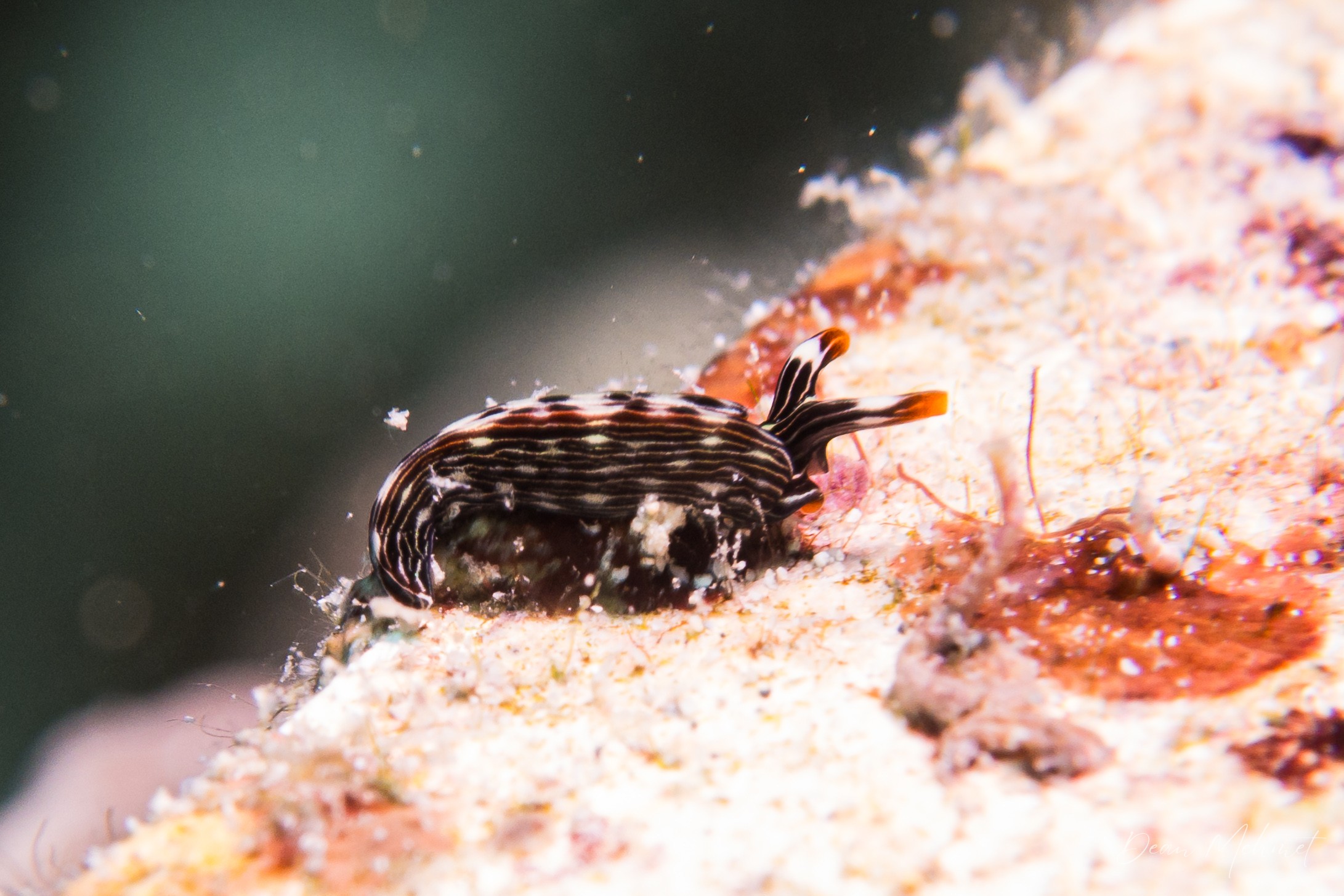
Slender Sap Sucking Slug

Photographic identification review

Evidence for this exact frame

Reviewed hypotheses are preserved separately from the current archive label and from iNaturalist computer vision. They record what the photograph supports, what remains plausible, and what the frame cannot resolve.

2 assessments

Latest audit record

Conclusion: Thuridilla cf. bayeri

Reviewed by Codex identification research on Aug 27, 2026 · 65% reviewer confidence.

Reasoning recorded at review

  • Rhinophore has an orange-red apical section
  • A broad transverse white band lies immediately below the orange-red section
  • The remaining rhinophore is dark
  • This excludes the Fig. 5(a) T. gracilis pattern

Alternatives considered

  • Thuridilla sp. 4 sensu Martin-Hervas et al. (2021)

    Why plausible: Fig. 5(f) has a closely similar orange-red, white and black rhinophore sequence

    Comparison: A clearer dorsal view resolving the blue-green head and body markings is needed

  • Thuridilla bayeri

    Why plausible: Best match to Fig. 5(c) among illustrated patterns

    Comparison: Confirmation needs the diagnostic body colour or spot characters or specimen evidence

Evidence limits & sources +
  • • Sharper original-resolution dorsal view of the head and body markings
  • • Expert comparison with T. bayeri and Thuridilla sp. 4 material
  • • Specimen or DNA evidence for a definitive assignment
Molecular phylogeny of Thuridilla and the gracilis species-complex ↗Primary paper · Martin-Hervas et al. 2021 · Fig. 5(c) and 5(f), p. 17Gary diagnostic plate leadExpert opinion · Personal communication relaying the published plate · Fig. 5
Show 1 earlier assessment +

Earlier audit record

Conclusion: Thuridilla cf. bayeri

Reviewed by local operator on Aug 27, 2026 · 65% reviewer confidence.

Reasoning recorded at review

  • Rhinophore has an orange-red apical section
  • A broad transverse white band lies immediately below the orange-red section
  • The remaining rhinophore is dark
  • This excludes the Fig. 5(a) T. gracilis pattern

Alternatives considered

  • Thuridilla sp. 4 sensu Martin-Hervas et al. (2021)

    Why plausible: Fig. 5(f) has a closely similar orange-red, white and black rhinophore sequence

    Comparison: A clearer dorsal view resolving the blue-green head and body markings is needed

  • Thuridilla bayeri

    Why plausible: Best match to Fig. 5(c) among illustrated patterns

    Comparison: Confirmation needs the diagnostic body colour or spot characters or specimen evidence

Evidence limits & sources +
  • • Sharper original-resolution dorsal view of the head and body markings
  • • Expert comparison with T. bayeri and Thuridilla sp. 4 material
  • • Specimen or DNA evidence for a definitive assignment
Molecular phylogeny of Thuridilla and the gracilis species-complex ↗Primary paper · Martin-Hervas et al. 2021 · Fig. 5(c) and 5(f), p. 17Gary diagnostic plate leadExpert opinion · Personal communication relaying the published plate · Fig. 5

Connected record

What this frame carries

Date
Jul 12, 2026
Site
Tawali Resort Main Wharf
Dive
Dive 1 - Tawali Resort Main Wharf
Depth evidence
2.1m · profile-estimated
Water
25.0°C
Identification
74% confidence

Environmental values describe this archive encounter. Profile-estimated depth is aligned from capture time and the dive-computer profile; it is not camera-recorded depth.