
Latest audit record
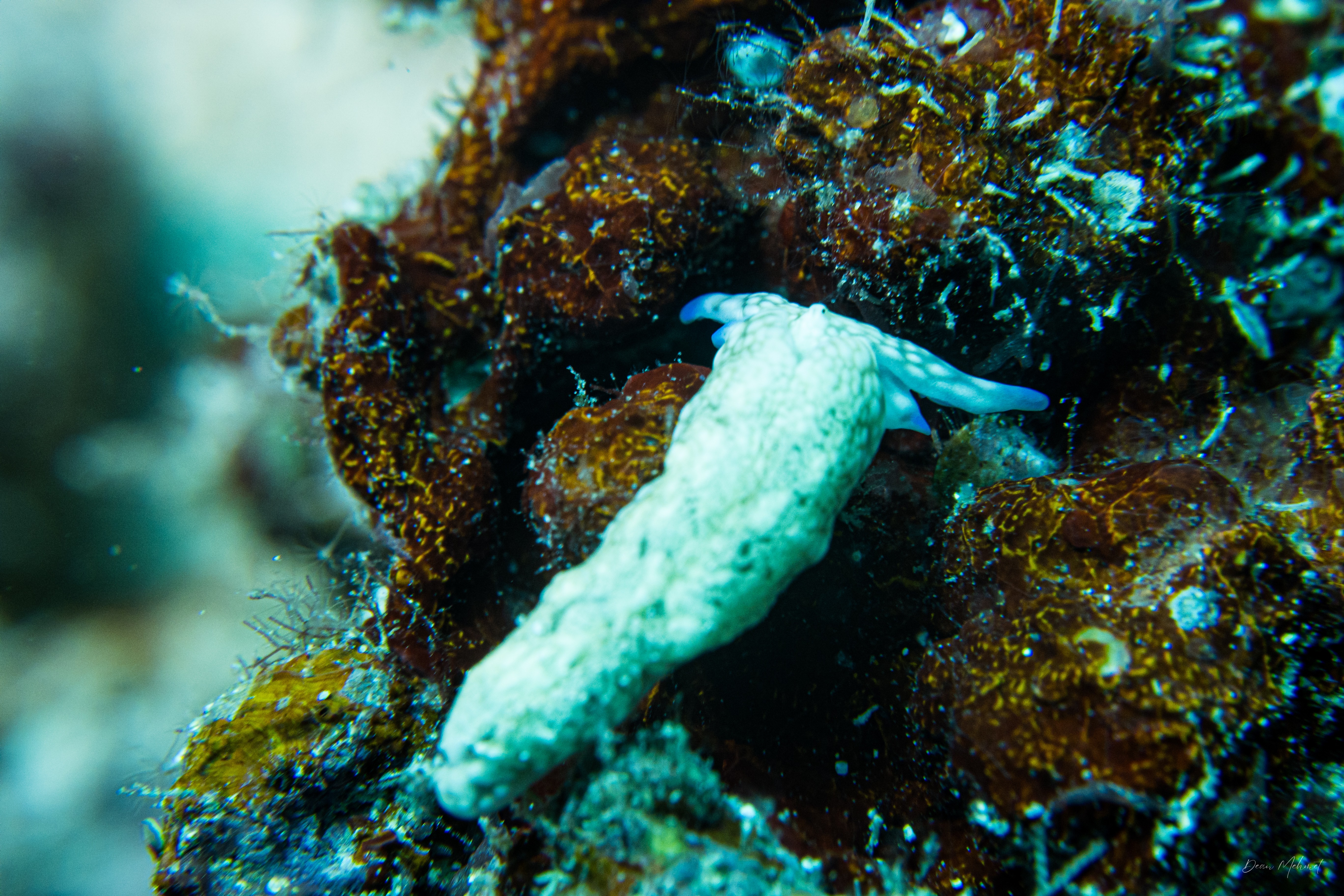
Conclusion: Elysia sp.
Reviewed by Codex identification research on Aug 27, 2026 · 94% reviewer confidence.
Reasoning recorded at review
- Elongate shell-less sacoglossan body
- Pair of long smooth longitudinally rolled rhinophores
- Paired parapodia folded together over the dorsum rather than the separate sea-hare mantle and parapodial cavity
- Pale green-white body with a fine green reticulate digestive pattern and low rounded papillae
Alternatives considered
- Elysia pusilla
Why plausible: Can vary from green and white to nearly solid white and has a papillose, tightly closed parapodial form
Comparison: A confirmed Halimeda host and sharper lateral/dorsal views of the parapodial margin are needed; the photographed body is less strongly Halimeda-segment-shaped than typical
- Elysia cf. tomentosa complex
Why plausible: Members of this complex can have papillose parapodia and variable pale green-brown coloration
Comparison: The complex contains multiple molecular lineages, and species-level placement needs host, fine papillation, reproductive/developmental or DNA evidence
- Elysia rufescens or another large reticulate Elysia
Why plausible: Long rolled rhinophores and a reticulate pale-green body are compatible with several tropical Elysia
Comparison: Size, host alga, full parapodial-edge colour and specimen evidence are unavailable
Evidence limits & sources +−
- • Host alga and body size are not recorded
- • Only one oblique dorsal frame is available
- • No radula, reproductive anatomy, development or DNA


