
Latest audit record
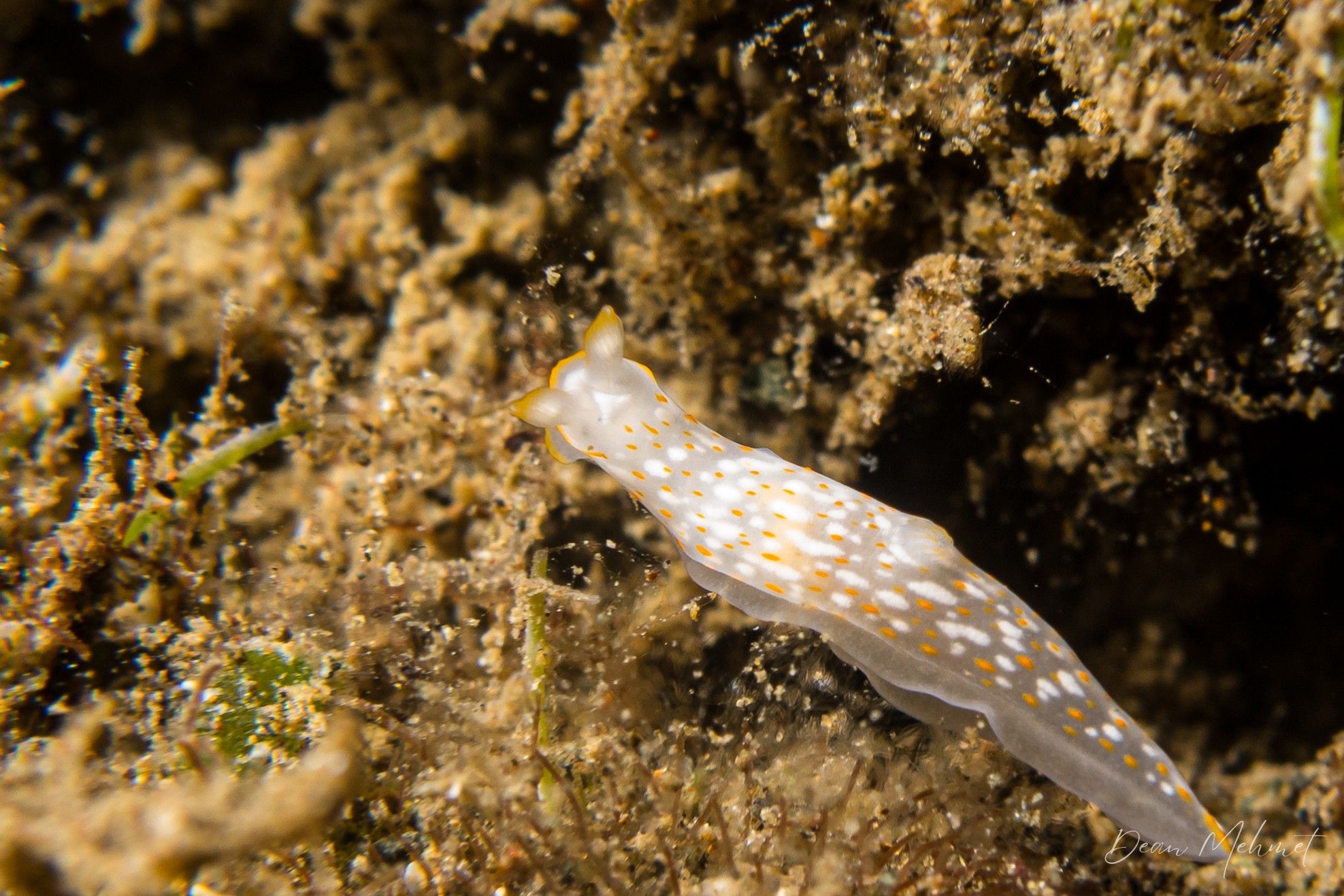
Conclusion: Elysia cf. asbecki
Reviewed by Codex identification research on Aug 27, 2026 · 82% reviewer confidence.
Reasoning recorded at review
- Elongate Elysia body with paired rolled rhinophores and broad closed parapodia
- Translucent whitish ground created by dense opaque-white pigment
- Numerous yellow-orange spots, several arranged into short longitudinal rows
- Distinct pale neck patch behind the rhinophores
- Yellow-orange pigment at the rhinophore apices and along parts of the parapodial edge
Alternatives considered
- Elysia asbecki
Why plausible: The overall white, orange-spotted, row-patterned morph and pale neck patch closely match the original description
Comparison: The characteristic dark-then-yellow rhinophore rings, tiny black parapodial dots and reddish patches at the parapodial bases and tail are not all resolved in this frame
- An undescribed white-and-orange Elysia
Why plausible: The Indo-West Pacific genus contains substantial unresolved and pseudocryptic diversity
Comparison: A second view, host alga, preserved anatomy and DNA would test whether the missing E. asbecki colour elements are genuinely absent
- Elysia trisinuata
Why plausible: Can be pale green-white with minute orange spots and white parapodial papillae
Comparison: E. trisinuata is expected to show a green digestive network, three-fold undulating parapodia and blunt greyish rhinophore tips rather than the strongly white striped-spotted appearance here
Evidence limits & sources +−
- • Only one oblique dorsal image
- • No body measurement or host-alga record
- • No radula, anatomy or DNA


